
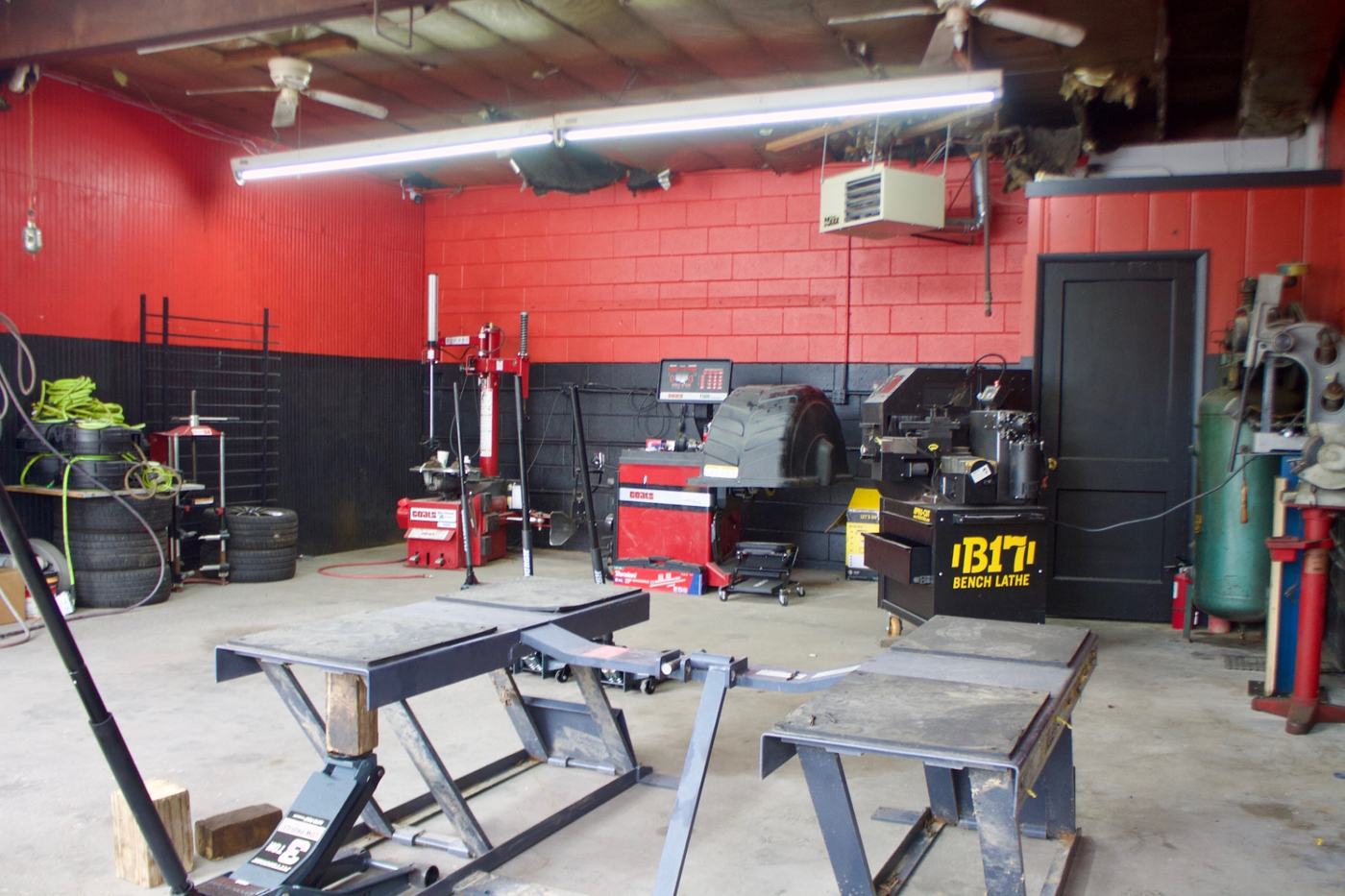
What we handle
Inspection
Tread depth at multiple points, wear pattern analysis, sidewall condition and age.
Rotation
Moving tires between positions to even out wear, typically at oil change intervals.
Balancing
Correcting weight distribution to eliminate vibration at speed.
Puncture repair
Proper plug-patch repairs from inside the tire where the damage location allows.
Mounting and replacement
New tires fitted, balanced, and torqued to specification.
TPMS service
Sensor testing, relearn procedures and service kits when tires are changed.
How to know when tires need replacing
Tread depth below 2/32 of an inch is legally worn out, but wet traction degrades well before that; many drivers replace at 4/32 for that reason. The old penny test works in a pinch — if you can see all of Lincoln's head, the tire is done.
Age matters independently of tread. Rubber hardens and cracks over time, and tires older than six to ten years should be inspected carefully regardless of how much tread remains. The date code is molded into the sidewall.
What wear patterns tell us
Both edges worn means chronic underinflation. Center worn means overinflation. One edge worn means an alignment camber or toe problem. Cupped or scalloped wear means worn dampers or an out-of-balance condition. Flat spots mean hard braking or a brake or ABS fault.
We read those patterns during inspection because they identify the underlying problem — replacing tires without correcting the cause simply consumes the new set the same way.
Can a punctured tire be repaired?
Sometimes. A puncture in the tread area, smaller than a quarter inch, with no sidewall damage and no prior driving on it while flat, can be repaired properly with a patch-plug from the inside.
Punctures in the shoulder or sidewall cannot be safely repaired, and a tire run flat has usually suffered internal structural damage even if it holds air afterward. We inspect the inside of the tire before making that call.
Pressure, rotation and the boring stuff that works
Correct pressure is on the door jamb placard, not the tire sidewall — the sidewall number is a maximum, not a recommendation. Pressure drops about one psi for every ten degrees the temperature falls, which is why TPMS lights appear on the first cold morning each fall.
Rotating on schedule and keeping pressures correct is the cheapest way to get full life out of a set of tires.
What affects the cost
Tire size and type
Larger diameters, performance and light truck tires cost more.
Number of tires
All-wheel-drive vehicles generally require replacing all four to protect the drivetrain.
TPMS service
Sensors may need service kits or replacement when they reach end of battery life.
Alignment
Recommended with new tires when wear patterns or handling indicate a need.
Tire Services FAQs
- How often should tires be rotated?
- A common interval is every oil change, or roughly every 5,000 to 7,500 miles. Check your owner's manual, since some all-wheel-drive vehicles specify their own pattern and interval.
- Why is my TPMS light on when the tires look fine?
- A visual check cannot detect a few psi of loss, and cold weather drops pressure enough to trigger the light. It can also indicate a failed sensor, which we test.
- Do I need to replace all four tires at once?
- On all-wheel-drive vehicles, usually yes, because mismatched rolling diameters stress the drivetrain. On two-wheel-drive vehicles, replacing in pairs on the same axle is acceptable.
- Should new tires go on the front or the rear?
- New tires go on the rear axle, even on front-wheel-drive vehicles. Better tread at the rear reduces the risk of oversteer and loss of control in wet conditions.
Next step: talk to the shop
Auto Pro Services is at 4013 Gallatin Pike, Nashville, TN 37216. Call with your year, make and model and describe what the vehicle is doing — we will tell you what testing is involved before you come in.
Call (615) 753-5150