
What suspension components wear out
Shocks and struts
Dampers lose their ability to control spring motion gradually, so the decline is easy to miss.
Control arm bushings
Rubber cracks and separates, allowing the wheel to move out of position under load.
Ball joints
Wear develops play in the steering knuckle connection; severe wear can separate.
Sway bar links and bushings
A frequent source of clunking over bumps.
Coil springs
Can sag with age or crack, changing ride height and alignment.
Strut mounts and bearings
Cause noise and binding when turning.
Signs of worn suspension
A ride that has become floaty or bouncy, nose dive under braking, body roll in corners, clunking over bumps, uneven or cupped tire wear, a steering wheel that is off-center, and the vehicle wandering on the highway are all suspension symptoms.
Cupped tire wear in particular is a reliable indicator of dampers that have stopped controlling wheel motion, and it is visible before the ride feels obviously wrong.
How suspension is inspected
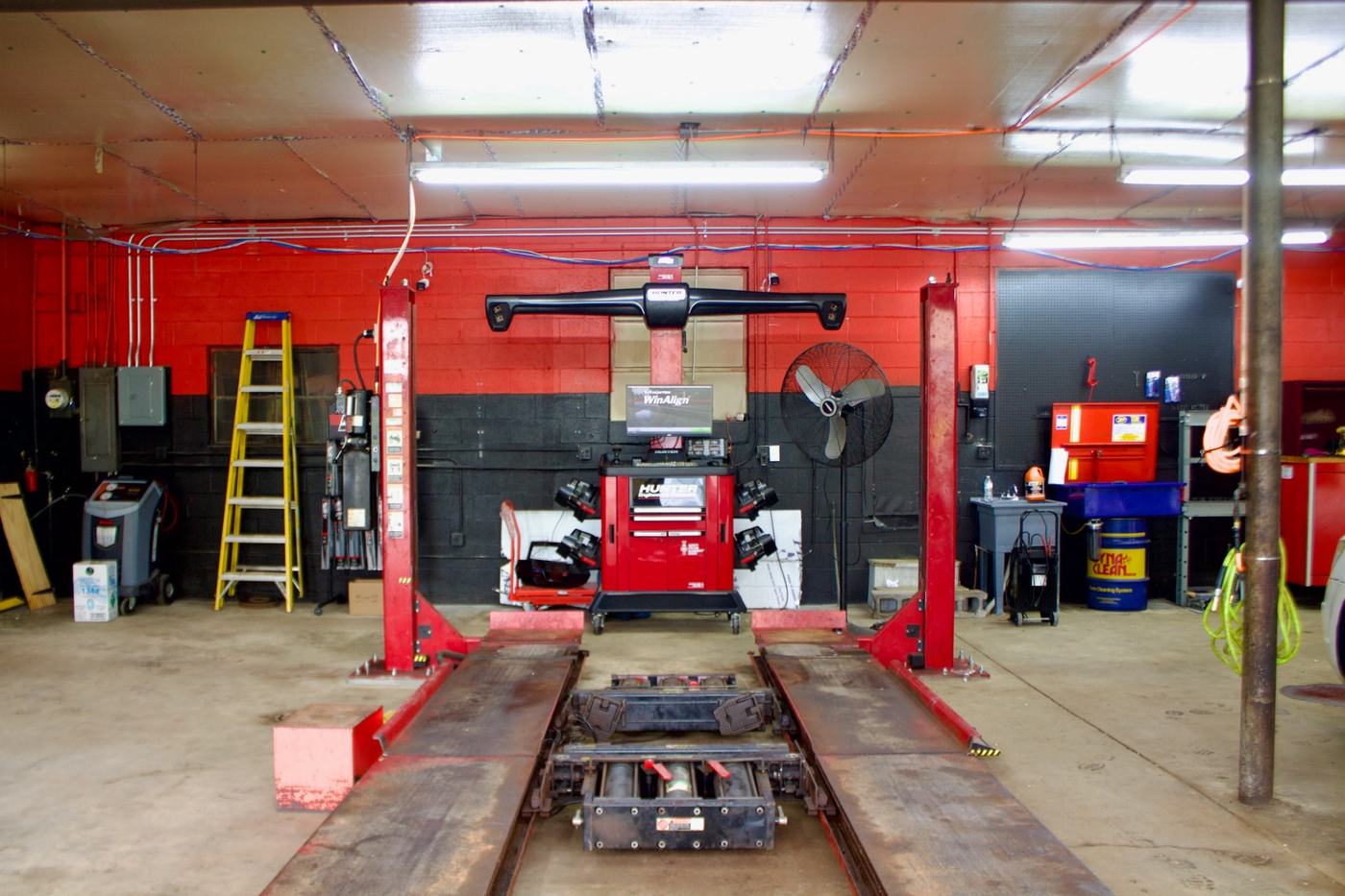
On the lift we check every joint and bushing for play with a pry bar, look for leaking dampers, examine tire wear patterns for the story they tell, and check ride height side to side.
A road test comes first, because some noises only appear under load or at particular speeds, and knowing when the noise occurs narrows down where it originates.
Should shocks and struts be replaced in pairs?
Yes, per axle. A new damper on one side and a worn one on the other produces uneven handling and braking behavior that is worse than two evenly worn units.
Replacing struts also changes suspension geometry, so an alignment afterward is not an upsell — it is part of doing the job correctly.
Suspension, alignment and tires are one system
Worn bushings and joints make alignment impossible to hold. Aligning a vehicle with a loose ball joint produces numbers that look correct on the rack and drift as soon as the vehicle is loaded.
For that reason we address worn components first, then align, then evaluate tire wear. Doing it in the other order wastes money.
What affects the cost
Component design
Some vehicles use complete strut assemblies; others require spring compression and reassembly.
Corrosion
Seized fasteners on older vehicles add significant labor.
How many corners
One failed link versus a full set of struts is a very different job.
Alignment
Most suspension repairs require an alignment afterward.
Suspension Repair FAQs
- How long do shocks and struts last?
- There is no fixed interval. Many vehicles need them somewhere between 50,000 and 100,000 miles, and rough roads shorten that. Inspection and tire wear patterns are more reliable than mileage.
- Is it safe to drive with a worn ball joint?
- It depends on the severity, but a severely worn ball joint can separate and cause loss of control. Any measurable play should be inspected promptly.
- Why does my car clunk over bumps?
- Sway bar links are the most common cause, followed by strut mounts, control arm bushings and worn ball joints. A lift inspection identifies which quickly.
- Do I need an alignment after suspension work?
- In most cases yes. Replacing struts, control arms or ball joints changes the geometry, and skipping alignment ruins tires.
Next step: talk to the shop
Auto Pro Services is at 4013 Gallatin Pike, Nashville, TN 37216. Call with your year, make and model and describe what the vehicle is doing — we will tell you what testing is involved before you come in.
Call (615) 753-5150