
What a maintenance schedule covers
Oil and filter
The core interval, tracked by mileage or by your vehicle's oil life monitor.
Filters
Engine air, cabin air and fuel filters on their own intervals.
Fluids
Coolant, brake, transmission, transfer case and differential fluids.
Belts and hoses
Serpentine belts, tensioners, coolant hoses and vacuum lines.
Spark plugs
Long-interval on modern engines, but far from lifetime items.
Brakes and tires
Measured and rotated rather than assumed.
Timing components
Timing belts have a hard replacement interval that must not be exceeded.
Normal versus severe service
Most owner's manuals list two schedules. Severe service applies to short trips, extended idling, stop-and-go traffic, towing, dusty conditions and sustained heat.
Commuting across Nashville in traffic, in Tennessee summer heat, meets the severe-service definition for most manufacturers. Following the normal schedule while driving under severe conditions is a common reason vehicles need repairs earlier than their owners expect.
The items people skip and later regret
Brake fluid, coolant and transmission fluid are the three most commonly neglected services, because none of them produce a symptom until damage is already done.
Timing belts are the sharpest example. On an interference engine, a belt that breaks in service bends valves and turns a scheduled maintenance item into an engine repair.
How we handle maintenance visits
We look up the schedule for your year, make, model and mileage, compare it against your service history, and tell you what is due now, what is coming up, and what can reasonably wait.
Anything found during inspection is reported with its condition rather than a blanket recommendation. Being told a belt has minor cracking and should be watched is more useful than being told to replace everything.
Maintenance and resale value
A documented service history is worth real money at trade-in or private sale, and it is the difference between a buyer believing a vehicle was cared for and hoping it was.
It also makes future diagnosis faster, because a shop knows what has already been replaced and when.
What affects the cost
Mileage milestone
Some intervals, like 60,000 or 100,000 miles, bundle several services at once.
Vehicle complexity
Access and fluid specifications vary widely between makes.
Deferred work
Catching up on skipped services costs more at once than spreading them across intervals.
Findings
Inspection sometimes reveals repairs that are separate from the maintenance itself.
Preventive Maintenance FAQs
- Does following the maintenance schedule really save money?
- Yes, in most cases. Fluid and belt services cost a fraction of the repairs that follow their failure, and catching wear early keeps single-component problems from damaging surrounding parts.
- Do I have to go to the dealership to keep my warranty valid?
- No. Federal law allows an independent shop to perform scheduled maintenance without voiding a manufacturer's warranty, provided the correct parts and fluids are used and the work is documented.
- My car has low mileage but is several years old. What still needs doing?
- Time-based items matter as much as mileage: brake fluid absorbs moisture, coolant inhibitors deplete, rubber components age, and oil degrades even with light use.
- Can you tell me what my vehicle needs next?
- Yes. Bring the vehicle in or call with your year, make, model and mileage and we will go through the schedule with you.
Next step: talk to the shop
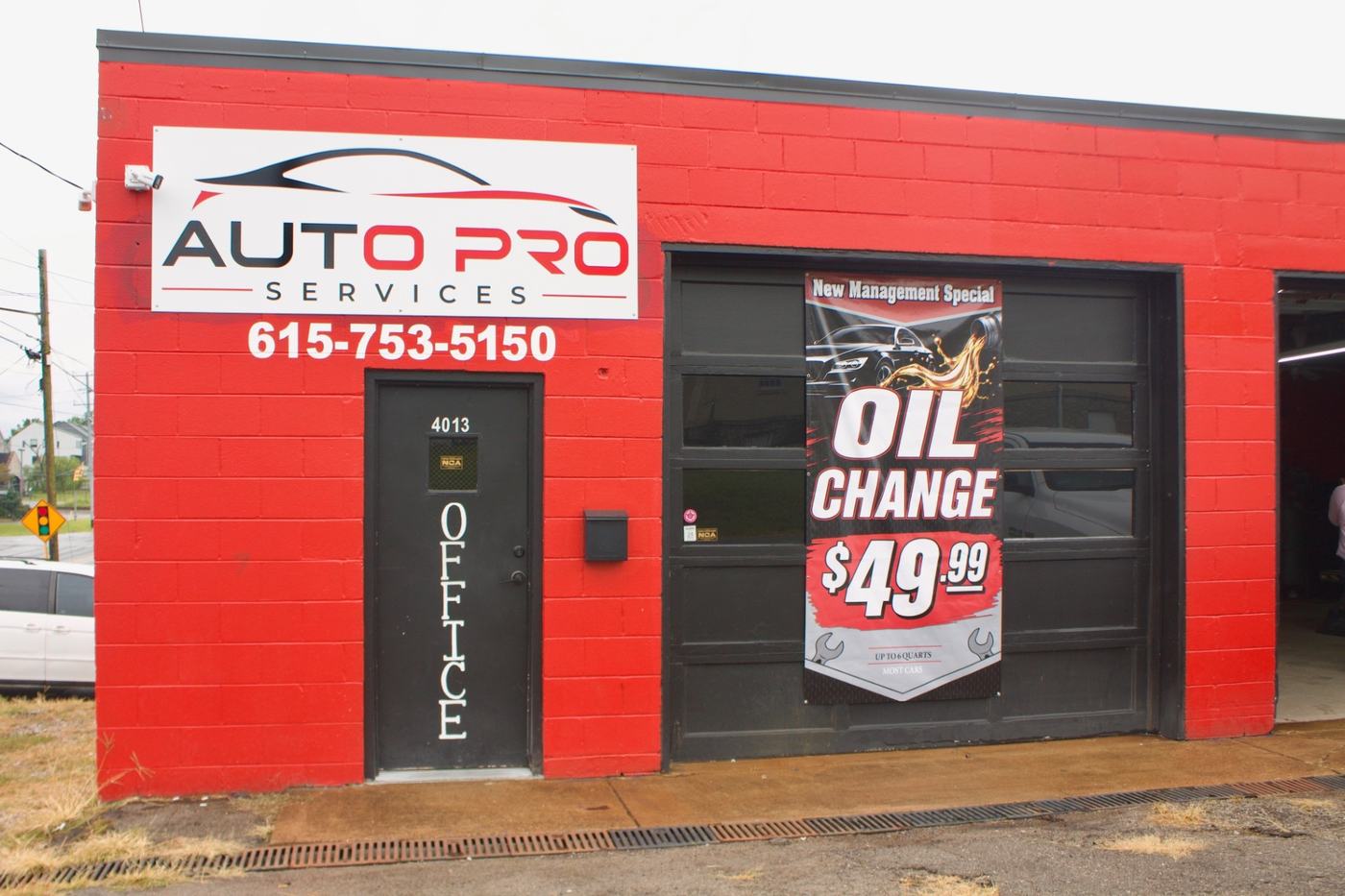
Auto Pro Services is at 4013 Gallatin Pike, Nashville, TN 37216. Call with your year, make and model and describe what the vehicle is doing — we will tell you what testing is involved before you come in.
Call (615) 753-5150